
First versions of harmonised data from I4NG now available
As part of the Infra4NextGen project, harmonised datasets for each of the five themes have been published for the first time on the NextGen Harmonised Data Gateway.
These initial versions include data from five social surveys that have been harmonised to make them as comparable as possible, even if the original question text and response scales differed.
As with all elements of the Infra4NextGen project, the harmonised data was developed in the context of five pillars of the NextGenerationEU programme.
NextGenerationEU aims for Europe ‘to build a greener, more digital and more resilient future’ with a focus on five key areas: Make it… Digital, Equal, Green, Healthy, and Strong.
The harmonised files include data from Eurobarometer, European Quality of Life Survey (EQLS), European Social Survey (ESS), European Values Study (EVS), and International Social Survey Programme (ISSP).
Panel survey data (CRONOS-3) collected in 11 countries on each of the five themes (2024-25) was also considered for inclusion and will be added to the second data harmonisation release that will be available in 2027.
NextGen Harmonised Data Gateway
The NextGen Harmonised Data Gateway serves as a central hub for all aspects of data harmonisation.
It provides users with comprehensive resources organised into three sections: the Variable Database, Harmonisation Toolbox, and Data.
Together, these sections offer transparent access to the datasets and provide the tools needed to understand and utilise the harmonisation process.
Variable Database
To create the harmonised datasets, thousands of survey items from the Searchable Inventory were screened.
This Inventory lists questions previously fielded by major cross-national surveys (Eurobarometer, EQLS, ESS, EVS, Generations and Gender Survey and ISSP) in Europe over the last 40 years.
For the Variable Database, the comparability of these measurement instruments across surveys was carefully examined, and more than a thousand suitable candidates for harmonisation were grouped into around 350 concepts across the five NextGenEU themes, forming the backbone of the entire Gateway.
Make it Digital concepts include communication and work; cybersecurity and safety; government and public policy; health-related internet usage; household and accessibility; impact of digital communication; internet usage; media and political engagement; and work satisfaction.
Concepts for Make it Equal are cost of living, elderly and family care; household finances and income; immigration; inequality and fairness; national identity and culture; parenthood, children and marriage; retirement and housing; gender roles; welfare and redistribution; and more.
Make it Green features questions related to climate change; economy and environment; energy; environmental problems and threats; and responsibility, willingness and activism.
The Make it Healthy database covers emotional and mental wellbeing; employment and labour market participation; general wellbeing and life satisfaction; healthcare access; healthcare navigation and use, housing and environmental quality; job engagement and satisfaction; and many more.
Make it Strong concepts are democratic participation and engagement; education and learning; migration and social cohesion; parental and family life; political values and democratic perceptions; trust in institutions; welfare; pensions and family care; and more.
The Variable Database for each theme can be downloaded as an Excel file.
Harmonisation Toolbox
The Harmonisation Toolbox helps users create customised, harmonised datasets for each topic with selected items from the Variable Database.
It contains detailed instructions to help guide users through the harmonisation process.
The guidelines include scripts prepared in the open-source software programme R.
Users retain complete control over the process when using these scripts and can modify them to suit their needs or apply them to other data selected for inclusion in the Variable Database or beyond.
Harmonised Datasets
Ready-to-use datasets are now available for download for each of the five key topics: Make it… Digital, Equal, Green, Healthy, and Strong, containing between 5 and 14 harmonised variables.
Each dataset is accompanied by comprehensive documentation.
This allows users to understand the nature of the data and the decisions made to enhance the harmonisation process.
Datasets can be downloaded from The Harmonised Data Gateway.
The Gateway was developed by a team of researchers led by Dr. Insa Bechert (GESIS – Leibniz Institute for the Social Sciences).
If you have any further questions, please contact the data harmonisation team via email.
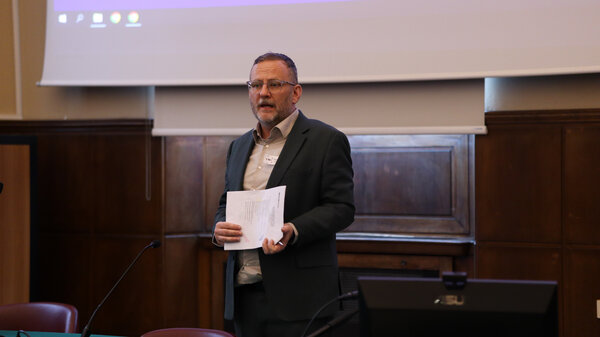
Project Coordinator of Infra4NextGen, Professor Rory Fitzgerald, pictured here at the Infra4NextGen Consortium meeting, warmly welcomed the new resource:
“Harmonising data from across surveys offers greater power from much larger sample sizes, plus the opportunity to even out the impact of specific question formulation, although care must be taken to consider methodological differences between studies.
“The new Gateway represents a significant addition in the research infrastructure landscape in Europe that will help to address the NextGenerationEU themes and serve as the basis for harmonisation on other topics in the future!”